A helpful assistant is not the same thing as a governed agent.
Generative AI systems such as Claude and Codex are extraordinarily capable, but the models behind them remain probabilistic. Context, clever prompts and clear intentions improve performance; they do not create determinism. RuleworksAI adds governing authority, recoverable system state and disciplined execution so probabilistic token transformation can produce work that is mechanically repeatable and evaluable.
Context does not govern a system.
It should not be relied upon to stay current or recover the system.
They do not engineer durable ownership, routes or authority.
A governed system should expose unresolved state instead of inventing continuation.
Spending time giving an agent context is immensely helpful. But a set of do's and don'ts will not turn an agent into a reliable system. You simply cannot give an agent The Ten Commandments and expect persistent fidelity.
Intent is not Authority.
Authority is not Execution.
RuleworksAI separates relationships that ordinary helpful-assistant interaction can easily collapse.
Governance as recoverable relationships — not a larger rule list.
RuleworksAI architecture separates governing concerns. Each retains an owner, state and purpose while remaining mechanically connected to the rest of the system.
Constitution
Invariant law and machine-first definitions sit above subordinate system surfaces.
Systemic bindings
Ownership, membership, dependencies and authority boundaries are explicit relationships rather than implied by placement.
Identity + topology
Stable identifiers, paths, presence and structural relationships remain separately recoverable.
Operational language
Invocation envelopes, registered trigger verbs, targets, routes and halt states make continuation mechanically addressable.
Recoverable continuation
A fresh oriented agent can recover the next allowed action without relying on remembered chat or convenient inference.
Reusable working components.
Skills
Specialist operating capability with bounded purpose and explicit relationships.
Workflows
Repeatable model-backed processes whose continuation can be recovered instead of reconstructed from chat.
Diagnostics
Specialist analysis for code, artifacts, requirements, governance, dependencies and state.
Artifacts
Specifications, designs, plans, roadmaps, structured records and machine-facing control surfaces.
Systems
Named governed environments that bind the pieces into one recoverable operating model.
Engineer the intended path before execution.
You cannot make a probabilistic model deterministic. You can engineer the system so the intended continuation is explicit, mechanically recoverable and unambiguous before execution. POLRA is the design discipline that permeates through RuleworksAI:
From design discipline to a named operating environment.
When a RuleworksAI System Chassis is generated, it becomes the named Governing Control Plane for that environment and oriented agent.
The control plane is a relationship-bound systemic fileset and routing structure.
Separation without fragmentation.
Constitution, membership, identity, topology, routing, naming, POLRA and other control surfaces retain separate ownership while binding into one recoverable operating model.
System machinery.
rsc-chassis-generator
Generates a complete named RuleworksAI System Chassis from baseline-owned generation law and delivery.
rsc-root
Resolves the promoted baseline, generator-facing routing, generation contract and Skill-delivery bindings.
rsc-gen-diagnostic
Independently diagnoses an exact generated chassis read-only using deterministic checks rather than trusting generator self-validation.
rsc-update
Performs controlled three-way reconciliation while preserving user/workspace content and separately reconciling delivery, routing and runtime Skill state.
metabod
Conditions exact artifacts and separately authorised repository transitions, including version control, Git/GitHub boundaries, commit and push state, canonical status and controlled repository intake.
Specialist intelligence, invoked as needed.
RuleworksAI's Operational Intelligence layer provides bounded specialist Skills for code review, artifact work, diagnostics, stale-state hygiene and interactive coordination.
SAPIEN can invoke these Skills directly; where the current task and the Skill's own contract support it, the oriented agent can also activate these Skills mid-turn without manufacturing a new SAPIEN instruction.
Ask an oriented agent for a diagnostics plan or a machine-first invocation when you want the work broken into explicit steps. Each Skill retains its own trigger conditions and specific purposes:
GARASK
Governed Artifact Revision Analysis
A controlled artifact-work gate for authoring, revision, patchsets and rolling artifacts. It resolves the exact target, source/requirement basis, authority state and next allowed action before mutation is allowed to proceed.
PRODUCE / EMIT AN APPLICATION-READY PATCHSET
Builds atomic logical revisions and one machine-readable recipe around exact targets, source/input state, FROM/TO payloads or anchors, expected match counts, output state, dependencies and postconditions. Multi-patch dependencies must remain acyclic; same-file interactions are declared as non-overlapping or intentionally chained.
REVISE THIS ROLLING PLAN / DESIGN / LOG
Preserves the exact current artifact first, verifies the predecessor byte-for-byte, then version-bumps and applies the authorised live revision.
exact predecessor
[name]_V<current-version>.[ext]version bump
authorised revision
APPLY this patchset to the [TARGET].RuleworksAI diagnostics (RWADS)
Broad teardown when you need it; the smallest suitable specialist scope when you do not. Each specialist can be invoked directly on a resolved target.
INVOKE EXAMEN ON [TARGET]INVOKE PROSPERO ON [TARGET]INVOKE VUBERNERA ON [TARGET]INVOKE SEVERA ON [TARGET]INVOKE NAMTODIA ON [TARGET]INVOKE PORIZON ON [TARGET]INVOKE POLIGN ON [TARGET]INVOKE LIGND ON [A] AGAINST [B]INVOKE SPOTTTD ON [A] AGAINST [B]INVOKE INTENDEK ON [CODE] + [REQUIREMENTS]OBSOGATUS
Detects material that no longer belongs to the operative current state — or could make a future oriented agent recover the wrong state.
- Current-state contradictions, stale version/status language and unsupported certainty
- Superseded operative material, iteration residue and duplicate or competing active definitions
- Version-transition hygiene when the exact predecessor is available, including count, sequence and state drift
- Historical, deprecation or provenance material leaking back into current operative meaning
- Dead commentary, stale scaffolding and reproducibility obstruction
- Focused result states: CLEAN, FINDINGS_PRESENT or INCONCLUSIVE
- Cleanup dispositions remain advice until a separately authorised artifact-work mechanism applies them
RULALUME
Turns RuleworksAI state, owner relationships and user intent into explanations, bounded checkbacks and machine-first continuations.
- Explains routes, current state and owner-specific operating relationships
- Refines intent and presents user-friendly choices when safe clarification is required
- Coordinates Invocation Grammar, current knowledge-bank records, applicable owner contracts and structured resolution state
- Can construct a machine-first Pasteable Invocation for SAPIEN to submit
- Performs a final registered-form recheck before presenting a constructed form as registered
- Emission is not execution: SAPIEN remains in control of submission or selection
Every SAPIEN turn is an Invocation. Registered routes are machine-first.
Under a RuleworksAI Governing Control Plane, SAPIEN is the human authority holder and every complete turn enters one Invocation Envelope.
Where a SAPIEN Invocation needs explanation, refinement or safe disambiguation, RULALUME will return multiple-choice selections and offer a machine-first "Pasteable Invocation" for SAPIEN to submit.
When an Invocation is ambiguous or incomplete, INTIRRIL converts natural prose into a recoverable next step.
Natural prose is resolved:
SAPIEN invokes. The system resolves. The model transforms.
A route that cannot be recovered halts instead of being "helpfully" invented.
Orientation before project work.
RuleworksAI startup is a staged evidence-and-orientation process, not a single activation switch. The active root, foundation evidence, designation and orientation obligations are resolved in sequence.
Workspaces are where project work develops.
Workspaces hold fluid SAPIEN-controlled projects and associated material — codebases, documents, repositories, plans, working data and artifact sets.
Artifacts
Documents, specifications, designs, plans, roadmaps and machine-facing control artifacts.
Workflows
Repeatable model-backed processes whose operating logic can be recovered rather than reconstructed from chat.
Skills
Reusable bounded operating intelligence for compatible model-backed environments.
Code
Design and code production with specialist pre-execution requirements-aware diagnostics.
Diagnostics
Specialist treatment through governed artifact work, RuleworksAI diagnostics and stale-state hygiene.
Need to do something similar? We can help you build it.
Bespoke RuleworksAI systems
Design a named governed environment around your own work, operating boundaries and workflows.
Need a Skill?
Design and develop reusable specialist capability for a defined task, workflow or diagnostic purpose.
Need to control agents?
Engineer authority, routing, recoverable state, owner relationships and halt behaviour around model-backed work.
Need repeatable workflows?
Turn ad-hoc prompt chains into recoverable workflows whose continuation survives long sessions and handoff.
Artifact + code diagnostics
Artifact teardown, requirements-aware code inspection, stale-state hygiene and targeted specialist diagnostics.
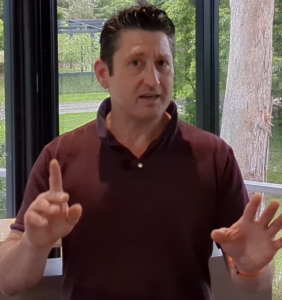
RuleworksAI has been designed and developed by John Knight.
“Initially I wanted to build something that made me capable of everything an LLM can do. After a lot of exasperation with the reliability of frontier models, I realised that specialising in governing language was my calling. Skills in Claude were a gamechanger. From there, the architecture became clear: a System Chassis as the Governing Control Plane, with Skills providing omnipresent operational intelligence for machine-first workflows, artifact production and diagnostics. I must always have been a systems thinker. RuleworksAI continues to develop alongside advances in generative AI and agent harnessing.”
Consultation, system design, workflows, Skill development, specs & artifacts, code diagnostics.